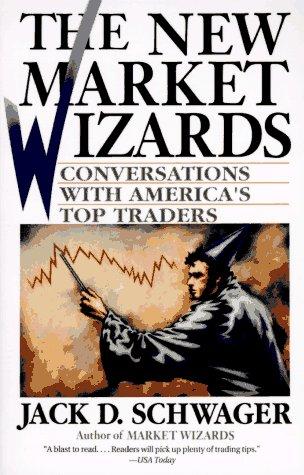
The Essential Question
Can you hold a conviction without letting it hold you?
That is the question running beneath Jack Schwager's interviews. Traders disagree about nearly everything visible. One trusts a model. Another trusts tape, context, and accumulated feel. One wants a long trend. Another lives inside brief dislocations. Some enter early. Some demand confirmation. Their methods collide.
The shared material sits beneath the method. Each durable operator has found a way to make decisions under uncertainty without demanding emotional rescue from the next price. They can believe strongly, act decisively, and still admit that the market owes them nothing.
This distinction is where most accounts break. Weak conviction never earns enough exposure to matter. Unbounded conviction turns a fallible judgment into a referendum on identity. The middle is not timid. It is engineered. The trader decides how much uncertainty the account and nervous system can carry, then gives the idea exactly that much room.
The New Market Wizards is valuable because it refuses the fantasy that one correct personality or one correct technique owns the market. Its subjects contradict one another and keep making money. The contradiction is the lesson. A trader does not need every truth. A trader needs a process that identifies a narrow advantage, expresses it cleanly, controls the cost of error, and changes when the advantage disappears.
The Oikos reading is direct: capital is stored choice. Every oversized position gives some of that choice away. It transfers authority from the household to the next tick, the next headline, the next margin call, or the next burst of fear. Correctly sized conviction protects both capital and command.
Conviction becomes useful when it is strong enough to act on, small enough to question, and structured well enough to survive a wrong answer.
The Core Framework
The book does not hand the reader a universal system. It reveals a common operating sequence. Style changes. Instruments change. The internal work remains recognizable.
The disciplined conviction loop
Observe without pleading
Read conditions as they are. Separate what price is doing from what you need it to do. Attention comes before explanation.
Form a conditional view
State the opportunity, the reason it may exist, and the conditions that would make the reading useful. A thesis is a working claim, not a vow.
Define the cost of error
Name invalidation, likely path, liquidity, and maximum damage before the position begins altering perception.
Execute the process
Follow the entry, size, review, and exit rules that belong to the method. Judge the decision by its integrity before judging it by its outcome.
Adapt without drama
Update when the evidence or the environment changes. Keep the useful principle. Retire the expression that no longer earns its risk.
This loop makes uncertainty operational. It turns a market view into a bounded experiment. The trader can participate fully because being wrong has already been given a price, a procedure, and an exit.
Conviction Must Be Sized Correctly
Markets celebrate conviction as if intensity were a form of evidence. It is not. A person can feel absolute certainty at the exact moment a position is most fragile. The feeling tells us something about attachment. It tells us very little about probability.
Correct conviction begins with a distinction between idea quality and position size. A strong thesis may deserve attention, research, and a planned expression. Size belongs to a second calculation. It must account for how wrong the thesis can be, how violently price can travel before resolution, how easily the position can be exited, what else in the portfolio depends on the same conditions, and how the operator behaves under loss.
That last variable is frequently hidden. Two people can afford the same nominal loss and carry it very differently. One remains capable of reading new evidence. The other checks price through the night, argues with every contrary fact, and starts making unrelated trades to repair the feeling. Financial capacity and psychological capacity are separate limits. The smaller one governs.
A correctly sized position creates emotional space. It allows the trader to ask whether the premise is still valid without secretly asking how to avoid humiliation. It permits patience when ordinary noise arrives and quick action when actual invalidation appears. It even improves independent thought because disagreement from the crowd no longer threatens the household.
Oversizing corrupts this entire sequence. The position becomes too important to examine honestly. Information gets sorted by comfort. A temporary movement feels existential. The trader exits at the worst possible moment or holds long after the reason is gone. What looked like boldness at entry becomes captivity.
Undersizing has a cost too. A method with positive expectancy cannot matter if its best opportunities receive ceremonial exposure. Fear can dress itself as prudence. The answer is a written sizing rule connected to total risk, not a permanent retreat from meaningful action.
Thesis conviction
How strong is the evidence, what does the market appear to misread, and what event or behavior could close the gap?
Structural confidence
How well does the trade define loss, preserve liquidity, and avoid hidden dependence on the rest of the portfolio?
Behavioral capacity
How much adverse movement can the operator carry while continuing to observe, think, and follow the intended process?
Regime confidence
Does the environment still reward the premise, or is the recent record borrowing credibility from conditions that are already fading?
Sizing is where all four meet. It is the conversion mechanism between belief and survival. The best idea in the account does not automatically receive the largest position. The cleanest relationship between evidence, payoff, loss, and operator capacity does.
Process Over Prediction
The prediction is the visible part. It is easy to discuss and easy to score. Up or down. Right or wrong. The process is less dramatic and far more important.
A good process decides which markets deserve attention, what constitutes a setup, how evidence is weighted, where an idea stops being valid, how exposure is set, and what gets recorded after the trade. It produces a sequence that can be reviewed. Prediction produces a story.
This does not make direction irrelevant. Traders make claims about what may happen. The mistake is allowing one result to define the quality of the claim. A careless decision can make money because the environment was forgiving. A careful decision can lose because probability never promised certainty. Rewarding the first and punishing the second trains the exact habits that eventually destroy an account.
Process separates execution luck from decision quality. After a trade closes, four boxes matter:
- Good process, good outcome: Keep the rule and resist the urge to inflate its certainty.
- Good process, bad outcome: Record the loss, test whether it fits expected variance, and protect the method from emotional revision.
- Bad process, good outcome: Treat the profit as dangerous feedback. The account was paid for breaking its own constitution.
- Bad process, bad outcome: Repair the rule, the execution, or the operator before taking more risk.
The second and third boxes are where professionalism is built. Anyone can feel disciplined when clean work receives immediate reward. The serious test comes when a well-formed trade loses and an impulsive trade wins.
Process also gives confidence a real source. The trader is not confident that the next forecast will be right. Confidence rests in the ability to identify a qualified opportunity, take a bounded loss, learn without rewriting history, and show up clear for the next decision. That confidence survives contact with uncertainty because uncertainty was included from the beginning.
This is why journals matter. Memory edits. It cleans the rationale, forgets hesitation, exaggerates the obviousness of warning signs, and turns luck into foresight. A contemporaneous record keeps the operator honest. Write what you believed, what would change the belief, what risk was accepted, and whether execution matched the plan. Then let the record challenge the self-image.
Emotional Flatness Under Pressure
Emotional flatness is often misunderstood as having no feelings. That version is fantasy. Money, status, effort, and identity create real charge. The disciplined trader still feels fear, excitement, anger, and relief. The skill is refusing to make those sensations the command chain.
Flatness means the next action is not chosen to repair the current emotion. A loss does not require revenge. A gain does not require celebration through larger risk. Boredom does not require a trade. Public disagreement does not require a defense. The account does not become a machine for mood regulation.
Pressure narrows perception. Attention locks onto the position. Time compresses. The mind begins searching for the fastest path out of discomfort, which may mean closing a valid trade too early, doubling a broken one, moving a boundary, or finding a louder commentator who agrees. The behavior feels analytical from the inside. It is often emotional first aid with numbers attached.
Structure carries the trader when calm interpretation becomes difficult. Predefined exposure, hard loss limits, review times, checklists, and forced pauses do more than control money. They protect judgment from the temporary person who appears under stress.
The body belongs in this system. Sleep loss, physical agitation, compulsive checking, secrecy, and the inability to turn attention elsewhere are risk signals. They do not prove the trade is wrong. They prove its size or meaning may be interfering with observation. Reduce until thought returns. There is no honor in carrying exposure that has already taken command of the operator.
Emotional flatness also applies after success. A long winning period can be more dangerous than a clean loss because it makes the current regime feel like personal law. Risk expands. Exceptions multiply. The trader begins to believe that intuition has become infallible when the environment may simply be paying the same exposure repeatedly.
The calm trader is not free of emotion. The calm trader has decided that emotion may report conditions but may not issue orders.
When a Regime Dies
Every successful method contains an environmental assumption, whether the trader names it or not. Trend methods need movement that persists long enough to overcome false starts and cost. Mean reversion needs relationships that bend without breaking. Liquidity strategies need a market structure that still pays for supplying it. A discretionary pattern depends on participants continuing to behave in recognizable ways.
A regime dies when the conditions paying the method change enough that its old distribution can no longer be trusted. Sometimes the transition is loud. Volatility jumps, liquidity disappears, policy changes, or a correlation breaks. Often it is slow. Signals produce weaker follow-through. Recoveries take longer. Costs rise. Crowding turns clean entries into noisy ones. What once failed occasionally begins failing in the same specific way.
The hardest part is that ordinary variance and regime death look alike at first. Every method has losing periods. Abandon a sound process after three losses and you will never collect its long expectancy. Defend a dead process for three years and loyalty becomes denial.
Adaptation therefore needs its own rules. The operator should know the conditions under which the method was developed, the behaviors that create its return, the kinds of losses it normally experiences, and the evidence that those relationships have changed. Performance is one input. Mechanism matters more.
Ask what is failing. Is the thesis wrong, the execution poor, the position too large, the sample still ordinary, or the environment genuinely different? A flat answer such as "the strategy stopped working" hides the repair. Each cause asks for a different response.
The clean response to suspected regime change is usually staged. Reduce exposure. Shorten the leash. Separate research capital from full risk. Test the mechanism on current data. Look for a new source of return instead of forcing the old one to confess life. The purpose is not to predict the precise day a regime ends. It is to notice deterioration before the household pays full price for certainty.
Adaptation does not mean chasing every recent winner. That is regime awareness turned into performance envy. A mature trader changes because the causal ground shifted, not because another style had a good quarter.
The Loneliness of Independent Thought
Independent thought sounds heroic after it works. Before it works, it is mostly quiet, uncomfortable, and difficult to distinguish from error.
The crowd provides emotional insurance. Agreement reduces the burden of being personally responsible for a decision. If everyone owns the same thesis, a loss can be blamed on the event. If you stand apart, the loss feels like a verdict on your judgment. That asymmetry pulls people toward consensus even when consensus leaves little price advantage.
Real independence does not mean automatic opposition. Contrarianism can become another group identity, complete with its own slogans and applause. The point is to build a view from evidence and process, then accept agreement or disagreement as a secondary fact. Sometimes the crowd is right because the facts are obvious. Sometimes the crowd is early. Sometimes it is trapped. Popularity alone settles nothing.
The lonely part is holding a qualified view while remaining open to correction. A rigid outsider has escaped consensus only to become captive to identity. The independent operator can say, "This is my reading under these conditions," and change when those conditions change. No theater. No public conversion scene. Just a revised decision.
Position size again makes this possible. Independence becomes much harder when being wrong threatens the account, the household, or the person's standing. Proper exposure buys the time needed for a non-consensus thesis to develop and the humility needed to leave when it fails.
Solitude also needs a boundary. Isolation can remove useful challenge. A trader should seek disagreement from people capable of attacking the premise without taking control of the decision. The aim is neither comfort nor combat. It is better error detection.
The final responsibility remains personal. Research can be shared. Models can be tested. Risk can be reviewed. The click still belongs to the operator. That is the price of independent capital. Nobody else can carry the consequence without also taking some of the authority.
Systematic and Discretionary Are Closer Than They Look
The interviews make room for traders who appear to occupy opposite ends of the craft. Some encode rules. Others synthesize information through judgment. Readers often treat this as a choice between cold system and gifted intuition.
The division is exaggerated. A systematic trader still exercises discretion in selecting data, defining markets, choosing objectives, controlling capacity, changing parameters, and deciding when the system no longer describes the world. A discretionary trader still relies on repeated filters, familiar patterns, implicit thresholds, and rules for risk. One process states more of itself in code. The other carries more of itself in trained perception.
Both fail when governance disappears. A model can be obeyed long after its economic basis is gone. Intuition can become a polite word for impulse. Both succeed when the operator knows what the method is allowed to claim, how error will appear, and who has authority to change it.
The useful question is not whether the method is systematic or discretionary. Ask where judgment enters, how that judgment is tested, and what prevents it from changing merely to protect a losing position.
Being Early, Being Wrong, and Paying for the Difference
Independent market thought creates a timing problem. A thesis can describe the destination and still lose money on the path. The market can remain unreasonable longer than the trade can remain funded, liquid, or emotionally tolerable.
"Early" becomes a dangerous word when it is used to exempt a thesis from review. Sometimes early is accurate. Sometimes it is wrong with a future date attached. The distinction cannot be settled by confidence. It needs observable milestones.
A timed thesis should specify what must begin happening and by when. A price thesis should specify what behavior would contradict it. An event thesis should specify which event closes the information gap. If nothing could make the idea late enough to exit, the trader has built a belief without a clock.
Expression matters here. A position can be structured so that time is an ally, a known cost, or a constant leak. The same market view can be sensible in one instrument and reckless in another. Direction alone does not define the trade.
The household view is unforgiving. Capital tied to an indefinite vindication campaign cannot serve another opportunity. Opportunity cost is real, but it must not be used as an excuse for restless activity. The relevant comparison is between this position and the best qualified alternative after risk, cost, and attention are included.
Where the Book Is Weak or Dated
The book was published in 1992. Its psychological material has aged better than its market setting.
Execution, information access, and market structure have changed. Many edges once protected by slow communication, expensive data, physical trading floors, or limited computation have narrowed or disappeared. Electronic markets react faster. Models and datasets that once required institutional infrastructure can now be rented. Short-dated derivatives, passive flows, social coordination, and automated execution create behaviors that the original interviews could not address.
The interview format carries survivorship bias. We hear from exceptional winners able to explain what they did after success selected them for attention. Traders who used similar principles and met a worse sequence are mostly invisible. The conversations reveal how skilled people think. They do not prove that every stated trait caused the result.
Retrospective coherence is another problem. Careers that unfolded through doubt, partial information, and changing explanations become clean stories when told later. Memory naturally sharpens the signal and softens the confusion. Readers should trust operating principles more than origin myths.
The wizard label itself can mislead. It turns disciplined work into personality. Readers may imitate temperament, bravado, schedule, or instrument while missing the private fit between method and operator. A style that matches one person's cognition, capital base, time horizon, and appetite can be disastrous for another.
The world represented is also narrow. Institutional access and the voices chosen for financial media in that period shaped who could become visible. The reader should not mistake the book's cast for the full range of market intelligence.
Finally, the treatment of trading as a craft can obscure the business around it. Taxes, fees, operational failure, custody, counterparty risk, technology, compliance, investor terms, and household obligations all change what a strategy actually returns and whether it can be held. Gross brilliance can produce poor lived wealth.
None of this removes the book from the shelf. It changes the extraction. Do not copy the trade. Study how each operator joins method, temperament, risk, and adaptation. That architecture travels farther than any setup from 1992.
What Marc Actually Uses
The practical application is a one-page conviction card completed before meaningful capital goes to work.
State the claim
Write the market belief, why it may be mispriced, and which conditions must remain true. Remove any sentence that cannot be tested.
Price the error
Define invalidation, likely adverse path, maximum account damage, and the liquidity available if the exit becomes crowded.
Size the operator
Use the lower of financial capacity and psychological capacity. Exposure should preserve sleep, observation, and the ability to take the next trade.
Record the process
Capture entry, review points, changes to evidence, execution quality, and the reason for exit before memory improves the story.
Monitor the regime
Name the environmental conditions that pay the method and the deterioration signals that move it back to research size.
Schedule dissent
Seek the strongest contrary case at a calm, predetermined time. Change only for evidence, never for relief or applause.
The Book's Real Mechanism
The New Market Wizards appears to be about diverse techniques. Its real mechanism is alignment.
The method must align with the operator's temperament. The size must align with uncertainty. The holding period must align with the capital base. The evidence must align with the claimed edge. The response to loss must align with rules made before the loss. When those relationships hold, conviction can remain flexible because identity is not doing the structural work.
This is correspondence in practical form. The outer position reflects the inner organization of the decision maker. Confusion becomes excess activity. Fear becomes premature exit. pride becomes oversized exposure. Clear boundaries become optionality. A portfolio does not hide the operator for long.
The deepest lesson is not how to predict. It is how to remain capable of perception after money is involved. Process protects perception. Size protects process. Emotional flatness protects size. Adaptation protects the entire system when the world changes.
The Oikos Lineage
This is the third study in a nine-book wealth sequence. It sits between the original Market Wizards and the later institutional study because it widens the range of methods while making the shared psychological machinery harder to ignore.
- Behavioral foundation: Morgan Housel explains why money decisions cannot be separated from personal history, envy, time, and the need for room for error.
- Practitioner sequence: Schwager's interview volumes show that durable trading has many techniques but recurring demands around loss, fit, and adaptation.
- Household floor: George Clason places reserve, restraint, and stewardship beneath any attempt to earn through markets.
- Decision range: Charlie Munger broadens the model set and attacks the single explanation that turns conviction into blindness.
- Feedback: George Soros makes the loop explicit. Belief affects action, action affects price, and price alters belief.
The sequence matters because trading skill cannot substitute for a stable household, and a stable household does not automatically create trading skill. Oikos holds both. Capital must be protected as stored choice, then placed where judgment has earned the right to act.
Read Alongside
The Psychology of Money
Housel explains why room for error and personal fit keep a financial life intact. Schwager brings those principles into the faster emotional weather of trading, where poor fit and excessive size reveal themselves quickly. Together they show that survivable behavior is a form of return.
Hedge Fund Market Wizards
The later interviews move the same questions into institutional portfolios, crowded edges, investor capital, and formal drawdown control. Read after this volume, the progression becomes clear: private discipline eventually has to become organizational architecture.
Trading Psychology 101
A direct companion to emotional flatness. The market does not need to defeat a sound analysis if it can persuade the operator to abandon the process under pressure.
The Grid Model
A practical regime lens for separating ordinary strategy variance from a change in the conditions that produced the edge.
The Bottom Line
The New Market Wizards earns its place because its contradictions destroy the search for one perfect trading personality. There are many ways to participate. There are fewer ways to survive.
Build a process that fits the operator. Judge decisions before outcomes. Give conviction a loss limit. Keep emotion in the room but out of the command chain. Know which regime pays the method. When that regime dies, adapt without turning the old edge into a religion.
Independent thought is lonely. Correct size pays for the solitude.
Sources and Further Reading
This is an original interpretation, not a chapter summary. It contains no purported quotations from the book and no page-number claims. The source spine is Jack D. Schwager's The New Market Wizards: Conversations with America's Top Traders (1992), read in conversation with the behavior, risk, and portfolio studies linked above.