The Essential Question
What must be true for you to remain in the game long enough for skill to matter?
Most people approach trading in the wrong order. They hunt for the entry, the indicator, the market, the person with the answer. They want an edge that will rescue them from uncertainty. Jack Schwager's interviews keep pointing somewhere less glamorous. The best traders begin by deciding what they are allowed to lose.
That reversal is the center of Market Wizards. Risk control comes before edge because edge only appears across a series of uncertain outcomes. A trader who cannot survive the losing members of that series never reaches the part where the advantage becomes visible. Accuracy is comforting. Survival is decisive.
The interviews are full of contradiction on method. Bruce Kovner, Richard Dennis, Paul Tudor Jones, Ed Seykota, Marty Schwartz, Michel Steinhardt, Tom Baldwin, and the rest do not share one setup, one time horizon, or one theory of price. Some use systems. Some use discretion. Some follow trends. Some trade against excess. Some read fundamentals. Some live close to price itself.
The contradiction is the gift. Schwager accidentally destroys the fantasy of a universal trading style simply by placing excellent operators beside one another. Their outer methods disagree. Their inner structure keeps rhyming: limit damage, accept uncertainty, work hard, think independently, and refuse to let one position acquire authority over the whole account.
The Oikos reading begins here. Capital is stored choice. A loss reduces choice, but ruin ends it. The first obligation of a steward is to protect the household from any single act of conviction. This applies whether the position is a futures contract, a business expansion, a property, a concentrated stock, or a career bet. Survival preserves the power to act when the real opportunity arrives.
The first duty of a trader is to remain capable of taking the next good risk.
The Core Framework
The book's traders differ in technique because technique sits at the far end of a longer chain. Durable performance begins with the operator, passes through rules for exposure and error, and only then reaches the trade.
The survival loop
Know the operator
Name the pace, ambiguity, drawdown, and decision load you can carry without becoming someone else under pressure.
Define the edge
State why this class of trade should earn more than it loses over a meaningful sample. A feeling can begin research. It cannot finish it.
Price the error
Decide where the thesis fails, how much the failure may cost, and whether market liquidity will still exist when you need it.
Execute without negotiation
When the invalidation arrives, exit. The rule was written by your calmer self for the exact moment your current self will want an exception.
Convert loss into information
Review the decision, keep what the loss taught, and prevent the lesson from becoming fear of the next qualified trade.
The loop matters more than any single result. One trade can be lucky or unlucky. A repeated process reveals whether the operator has built something real.
Risk Control Before Edge
Edge receives more attention because it sounds like intelligence. Risk control sounds defensive. In practice, risk control creates the conditions under which intelligence can be measured.
Imagine a method with a genuine positive expectancy that still produces six losses in a row. That sequence is ordinary. If each loss threatens the account, the method is unusable even if its underlying math is sound. If the position is sized so the sequence can be absorbed without panic, the same edge has room to show itself. Position size turns a statistical idea into a livable practice.
This is why a trader can be right about direction and still be wrong about the trade. Entry, size, instrument, liquidity, and time all carry risk. A thesis may eventually work after the option expires, the margin call arrives, or the household needs the capital. Markets do not grade the idea in isolation. They grade the entire expression.
Risk control also protects perception. An oversized position does more than threaten money. It bends the mind around the need for relief. Every price becomes evidence. Contrary facts feel hostile. Sleep thins out. The trader stops observing the market and starts pleading with it.
Small enough is a serious advantage. Proper size allows the trader to remain curious when wrong. It preserves the ability to add when evidence improves, exit when evidence breaks, and return later without the residue of humiliation. The account stays open, and so does the mind.
Financial capacity
How much can the account lose while preserving future opportunity, liquidity, and the household floor?
Psychological capacity
How much can the operator carry while preserving sleep, patience, honesty, and obedience to the plan?
Use the lower number. A portfolio can survive on paper while the person running it quietly becomes incapable of sound judgment.
Cutting Losses Is a Discipline of Identity
Everyone understands the instruction to cut losses. Few people understand why it becomes so difficult precisely when it matters.
A losing position begins as a financial fact. Then identity enters. The trader has told a story, perhaps publicly. Research hours have been invested. The entry was supposed to prove competence. Closing now feels like converting uncertainty into a verdict. So the exit moves. The time horizon changes. A trade becomes an investment. New evidence is recruited to defend old exposure.
The loss grows because the operator is trying to save a version of himself.
Professional loss cutting separates the person from the position. The thesis was a conditional claim, never a personal oath. Invalidation says the conditions no longer support paying for that claim. Exit is the correct completion of the original decision.
This sounds clean in prose. It is rough in real time. Price often turns immediately after an exit. That pain trains people to ignore the next stop. But a risk rule cannot be judged by the most irritating single outcome. Its purpose is to prevent the rare uncontrolled loss that can erase years of good work. Insurance always looks wasteful until the day it becomes the only thing that matters.
There is a second failure after the exit: revenge. The trader wants the market to return the loss and restore the self-image. Size rises, standards loosen, speed replaces thought. The original small error becomes a chain of emotionally connected trades.
A clean stop includes a pause. Record what happened. Restore the body. Let the need to be made whole pass before new capital moves. The market is not holding your money in escrow. The next trade owes nothing to the last one.
A stop protects capital. A pause protects the mind that must decide what happens next.
Method Must Match Temperament
The book's deepest psychological point is easy to miss because readers are busy collecting techniques. A profitable method borrowed from the wrong person can become a losing method in your hands.
Temperament determines which forms of uncertainty you can carry cleanly. A patient person may tolerate long periods of inactivity but hate rapid decisions. Another may read short-term movement beautifully and lose discipline when forced to sit through a long thesis. Some people need explicit rules. Others can synthesize context but become trapped by rigid systems. Neither is morally better.
The right method fits several private facts at once: attention span, appetite for ambiguity, speed of decision, tolerance for drawdown, available time, capital base, emotional response to being wrong, and the kind of work a person is willing to repeat for years.
Fit does not excuse weak discipline. A person cannot declare that impulsiveness is a discretionary style or that terror is conservative risk management. Temperament is raw material. Training gives it form.
The distinction matters because self-knowledge is often confused with self-description. "I am a contrarian" may mean the person likes feeling superior to consensus. "I am a long-term investor" may mean he cannot admit a broken thesis. "I am systematic" may mean she wants the model to carry responsibility. Labels can hide the exact weakness they claim to solve.
Real fit appears in behavior. The trader can execute the process on an ordinary Tuesday, during a drawdown, after a large win, and while somebody using another method is making more money. The method leaves enough psychological room for consistency.
This is correspondence in its most practical form. The outer strategy reflects the inner operator. A mismatch eventually appears as hesitation, override, overtrading, boredom, or panic. The chart shows the trade. The journal shows the person.
There Is No Single Correct Style
Schwager's interview structure makes a strong argument without announcing it. Excellent traders can hold opposing beliefs about how markets should be approached. One person's necessary confirmation is another person's ruined entry. One person's diversification is another person's dilution. One trusts a model. Another believes the model will miss the part that matters.
Readers often respond by asking which wizard is right. The better question is which problem each method solves, under which conditions, for which operator.
A method is a compact between a source of advantage and a set of costs. Trend following accepts many small false starts to remain present for a large move. Mean reversion accepts that normal relationships can stay abnormal and occasionally break. Discretion accepts dependence on human judgment. Systems accept model error and the possibility that rules describe a past that has ended. Concentration increases consequence. Diversification introduces weaker ideas and hidden correlation.
Every style pays rent.
This should produce humility, not vagueness. Plural methods do not mean every method works. The trader still needs a defensible source of return, honest records, adequate sample size, controlled costs, and evidence that the practice adds value after risk. The absence of one universal truth does not grant immunity from measurement.
The lesson travels beyond markets. Businesses can grow through product excellence, distribution, cost discipline, acquisition, or a narrow local advantage. Families can build wealth through ownership, high savings, patient allocation, entrepreneurship, or combinations of these. Copying the visible move without the hidden system creates fragile imitation.
Losing as Tuition
Nearly every serious trader pays for education with losses. The phrase "losing as tuition" becomes dangerous, though, when it is used to romanticize careless exposure.
Tuition purchases learning only when the lesson is extracted. An undocumented loss caused by a repeated impulse is a fee with no education attached. A giant loss that threatens solvency is not a more advanced course. It is poor enrollment control.
Useful tuition is bounded, observed, and translated into a change in behavior. The trader knows what question the capital was testing. Afterward, he can separate at least four possibilities: the thesis was wrong, the process was sound but variance arrived, execution damaged the result, or the position was too large for the uncertainty carried.
These distinctions prevent two common errors. The first is learning nothing because the outcome is blamed on bad luck. The second is learning the wrong thing because every loss is treated as proof that the method failed. A clean decision can lose. A reckless decision can win. Outcomes matter, but they cannot be allowed to rewrite process quality after the fact.
The market charges twice when shame blocks review. First it takes money. Then the operator refuses the information because looking directly at the loss hurts. Mature traders pay once.
There is also a graduation requirement. A lesson that appears in the journal five times is no longer tuition. It is a chosen expense. At some point the rule must change, the size must fall, or the person must stop trading that pattern.
The Difference Between Confidence and Certainty
The traders in Market Wizards often show extraordinary confidence. Readers can easily imitate the attitude while missing the structure underneath it.
Confidence says, "I know how I will act under these conditions." Certainty says, "I know what the market must do." The first is earned through preparation and repetition. The second is a demand placed on a system that does not answer to us.
This is why a strong trader can act aggressively and exit quickly. The confidence belongs to the process, not the forecast. If the evidence changes, changing the position confirms the process. There is no need to stage a defense of the original view.
Certainty also distorts size. If the future feels known, prudent exposure looks timid. Debt looks efficient. Concentration feels honest. The position becomes large enough that new information threatens the household. Then confidence hardens into captivity.
A useful practice is to write both sides before entry. What would make the thesis more likely? What would make it less likely? Which observation would require an immediate exit? Which would require only a review? The trader enters with a map instead of a prophecy.
Where the Book Is Weak or Dated
Market Wizards was published in 1989. Its principles of risk, fit, and discipline have aged far better than its market setting.
The original cast worked in a world of telephone orders, physical pits, slower information, wider spreads, high data costs, and much less accessible computing. Some specific advantages belonged to that structure. A modern reader cannot assume that an old setup survives electronic execution, global competition, automated market making, passive flows, social coordination, and cheap institutional-grade tools.
The book also has a large survivorship problem. Schwager selected exceptional winners. We hear their explanations after success made them visible, while people with similar beliefs, effort, and apparent discipline who met a worse sequence are absent. Interviews are powerful evidence about how skilled traders think. They are weak evidence about the base rate of becoming one.
Retrospective stories tend to become cleaner than lived decisions. Memory arranges turning points. Luck receives less narrative weight. A career built through partial information becomes a coherent philosophy. The operating rules deserve attention. The mythology deserves a discount.
The title itself encourages hero worship. "Wizard" makes disciplined practice sound like rare personal magic. Readers may copy a trader's bravado, sleep schedule, instrument, or famous trade while ignoring the years of work, private losses, capital conditions, and temperament that made the approach viable.
The range of voices is narrow by current standards. The visible trading industry of the period shaped who had access to capital, institutions, and financial media. This collection should not be mistaken for the complete human range of market intelligence.
Finally, the book can make trading appear more central to wealth than it is for most households. Active trading is a demanding craft with terrible base rates after costs. For many people, low-cost diversified ownership, a high savings rate, useful work, and patient compounding are better tools. The universal lesson is risk governance, not the requirement to trade.
The book stays on the shelf because the right extraction survives the dated machinery. Study how these traders protect the ability to continue. Leave the old market plumbing where it belongs.
What Marc Actually Uses
The practical application is a pre-trade risk card and a post-loss review. One page before capital moves. One page after a meaningful loss. No speeches.
State the edge
Write why this class of trade should work over a series, which evidence supports it, and which conditions pay it.
Set invalidation
Name the price, event, or change in evidence that ends the thesis. Decide it while the mind is calm.
Cap account damage
Size from the acceptable loss backward. Include gaps, slippage, liquidity, correlation, and the chance that several positions are one bet.
Check operator fit
Ask whether the pace, holding period, ambiguity, and likely adverse path match the person who must execute the plan.
Install the pause
After a stop or rule break, reduce speed. No revenge trade. Restore clear perception before new risk enters.
Collect the tuition
Record thesis quality, process quality, execution, size, emotional state, and the one behavior that changes because of the loss.
The Book's Real Mechanism
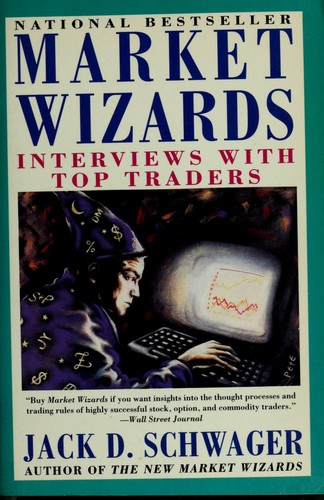
Market Wizards appears to be a collection of extraordinary market stories. Its real mechanism is loss governance.
The trader chooses a method that fits. The method identifies a qualified risk. Position size limits the cost of being wrong. A stop converts invalidation into action. The review converts the loss into information. The information improves the next decision. Capital and perception remain available.
Break any link and the loop degrades. Poor fit creates overrides. Undefined risk creates hope. Excess size creates fear. A missed stop creates captivity. Shame prevents learning. One damaged decision begins governing the next.
This is Oikos because the household is the final account. Trading skill that destroys sleep, relationships, liquidity, or the ability to choose has produced a false profit. Wealth is measured by command over life, not by the excitement of the gross return.
The Oikos Lineage
This is the second study in a nine-book wealth sequence. It follows the behavioral foundation and opens the practitioner sequence by establishing the rule that every later method must obey: survive first.
- Behavioral foundation: Morgan Housel shows how personal history, envy, and the need for room for error shape every money decision.
- First practitioner law: Market Wizards places risk control, loss discipline, and personal fit beneath all technique.
- Wider method range: The New Market Wizards strengthens the case that conviction must remain flexible and correctly sized.
- Institutional pressure: Hedge Fund Market Wizards carries the same laws into scale, investor capital, edge decay, and formal drawdown governance.
- Household floor: The broader Oikos pillar keeps trading subordinate to stewardship, freedom, and stored choice.
The sequence moves from the person to the trade, then from the trade to the institution. The same pattern repeats at every scale. Protect perception. Protect capital. Preserve the right to act again.
Read Alongside
The Psychology of Money
Housel explains why room for error is the hidden condition of compounding. Schwager shows the same law under faster pressure. Together they make survival more than a defensive posture: it is how time remains available to an edge.
The New Market Wizards
The sequel widens the range of successful styles and pushes harder on correctly sized conviction. Read it next to see why the original lesson survives even when methods, markets, and personalities continue to disagree.
Hedge Fund Market Wizards
The later interviews move risk discipline into portfolios, firms, crowded trades, and outside capital. Private self-command becomes institutional architecture, with new failure points created by scale.
Oikos
The pillar restores the purpose around the trade. Capital serves the household, freedom, and future choice. The market is one field of practice, never the master of the whole life.
The Bottom Line
Market Wizards earns its place because it strips away the hunt for one secret technique. The famous traders disagree too much for that fantasy to survive.
They leave a harder standard. Control risk before searching for return. Cut losses before identity takes command. Choose a method your actual temperament can execute. Measure process across a series. Pay tuition in small, deliberate amounts, then collect the lesson.
The market never owes you certainty. Build so you do not need it.
Sources and Further Reading
This is an original interpretation, not a chapter summary. It contains no purported quotations from the book and no page-number claims. The source spine is Jack D. Schwager's Market Wizards: Interviews with Top Traders (New York Institute of Finance, 1989). Bibliographic details were checked against Google Books and the current Wiley edition page.