The Essential Question
How do you build a mind that becomes more useful as reality gets more complicated?
Most intelligence is trained inside a fence. The accountant sees costs, the psychologist sees motives, the engineer sees constraints, and the investor sees price. Real decisions arrive with all four tangled together. The fence that made each expert useful can also make each one blind.
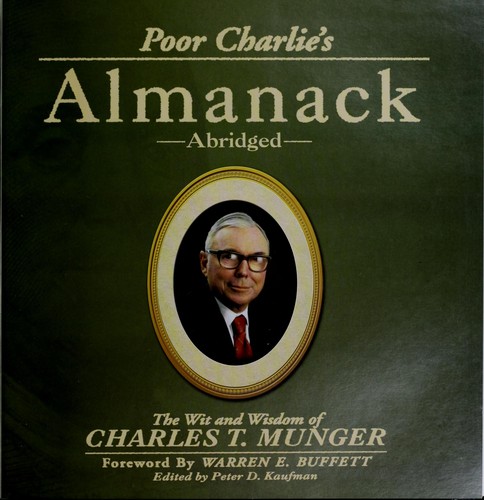
Poor Charlie's Almanack is Munger's campaign against that blindness. Peter Kaufman assembled talks, commentary, biography, and investing thought into a large, eccentric object whose real subject is judgment. The investments matter. The deeper concern is the quality of the mind choosing them.
Munger's answer is a working lattice of models drawn from the durable ideas of many disciplines. Economics explains scarcity and exchange. Psychology explains why the person reading the economic facts may distort them. Biology explains competition, adaptation, and selection. Mathematics explains probability and scale. Engineering explains redundancy, breakpoints, and margin of safety. History shows what happens when these forces collide over time.
The word latticework matters. A shelf of disconnected ideas is trivia. A lattice carries weight because the parts support one another. The models must meet inside a live decision, correct each other's blind spots, and expose the story that one favored discipline wants to tell.
The Oikos reading begins with responsibility. Wealth is never produced by finance alone. It emerges from a household of interacting systems: character, incentives, time, skill, reputation, capital, relationships, and luck. Better judgment protects the whole field.
A useful mind does more than collect facts. It gives each fact somewhere to attach and another model with which to argue.
The Core Framework
The book offers no neat five-step system. That is part of its honesty. Judgment is built through a repeated discipline that becomes faster and quieter with use.
The judgment loop
Assemble the models
Learn the few large ideas in disciplines that repeatedly govern human systems. Keep the threshold high. A model should explain consequences, not merely decorate conversation.
Map the system
Identify the people, constraints, feedback loops, probabilities, and time horizons actually present. Decide which models carry weight here.
Follow the incentives
Ask what each participant gains, loses, reports, hides, and learns to repeat. Include your own reward structure before judging anyone else's behavior.
Invert the outcome
Describe the path to ruin, corruption, paralysis, or permanent loss. Remove those paths before trying to make the winning case more elegant.
Wait, then act with weight
Most situations do not deserve commitment. Preserve attention and capital until several models agree, the downside is bounded, and the opportunity can matter.
The loop compounds. Every decision creates an example. Every example either strengthens the lattice or reveals a missing connection. Experience becomes valuable when it is attached to an explanation of why the result occurred.
A Latticework, Not a Bag of Tricks
Mental models became popular because they promise portable intelligence. They also became a collecting hobby. People memorize labels, quote biases, and feel the pleasant glow of understanding without changing a decision.
Munger's stronger claim is structural. Facts become usable when they hang together. A model earns its place by improving prediction, revealing a cost, or changing action. Several models should be brought against the same problem because reality has no obligation to stay inside an academic department.
Consider a business with rising sales and weakening cash. Accounting asks where the cash went. Economics asks whether customers have power. Psychology asks whether management is defending an old identity. Biology asks whether the company is adapting or merely growing larger in a dying niche. Engineering asks which dependency can break the system. Incentive analysis asks who gets paid for revenue instead of durable value.
No single lens completes the picture. The advantage appears in the interaction. A good model can correct another good model when each is being pushed beyond its proper boundary.
This creates a duty to learn broadly and unevenly. The goal is not equal mastery of every field. The goal is fluency in the ideas that carry the most explanatory weight, plus enough humility to know when a specialist should enter. Worldly wisdom is disciplined translation.
Inversion: Remove the Path to Ruin
Forward thinking asks how to win. Inversion asks how the system fails.
The second question is often easier because failure has recurring shapes. Excess debt removes time. A single supplier creates captivity. A partner with weak character converts every agreement into monitoring work. A portfolio sized for the expected case breaks when sequence turns hostile. A culture that punishes bad news learns to report good news until reality arrives.
Inversion is subtraction before ambition. List the actions that would guarantee misery, insolvency, distrust, poor health, or permanent reputational damage. Then stop volunteering for them.
This is more serious than pessimism. Pessimism expects failure and withdraws. Inversion studies failure so action can continue with fewer fatal routes. It turns fear into design.
There is a hard limit. Avoiding obvious stupidity does not identify every worthy opportunity. A life built only around defense can become small, cautious, and sterile. Inversion protects the floor. Curiosity, courage, and creative work still have to build the ceiling.
Forward question
What combination of demand, skill, capital, timing, and endurance would allow this to work?
Inverted question
What would make this fragile, dishonest, forced, or unable to survive a bad sequence?
The Psychology of Human Misjudgment
The book's most famous psychological material works because it removes the flattering assumption that intelligence governs behavior. A clever person still wants consistency, status, relief, belonging, reciprocity, and a reason that makes the chosen action feel respectable.
Misjudgment rarely arrives wearing one label. Incentive-caused bias joins social proof. Commitment hardens the original error. Authority supplies permission. Deprival creates urgency. Stress narrows attention. A bad idea becomes much stronger when several ordinary tendencies push in the same direction.
Munger treats these combinations as especially dangerous because they can produce an outcome far larger than any ingredient suggests. This is the psychological version of a complex system crossing a threshold. The crowd does not feel irrational from inside the crowd. Each small pressure makes the next step feel reasonable.
A bias list is therefore a poor shield. Naming hindsight bias after the meeting does not recover the capital. The practical defense is architecture: written criteria before commitment, independent views before consensus forms, incentives that reward the result actually wanted, checklists at recurring failure points, and enough distance for contradiction to remain socially possible.
Self-application is the price of admission. Using the framework only to diagnose employees, politicians, customers, or markets creates one more vanity system. The first misjudgment to inspect is the one paying you to remain convinced.
Incentives Are the Master Key
When behavior confuses you, inspect the reward structure before inventing a character theory.
People learn what a system truly values from what it pays, promotes, excuses, and measures. A sales plan tied to volume will find volume. A manager rewarded for quarterly margin will discover costs that can be pushed into next year. An analyst paid for activity will keep producing activity. A family that gives attention only during crisis quietly trains crisis.
Incentives shape cognition as well as action. A person can become sincere inside a self-serving interpretation. The commission does not always create a conscious lie. It directs attention toward the facts that permit the rewarded conclusion.
This makes design more important than moral speeches. If the score points away from the mission, the score usually wins. Good people trapped inside a bad structure either adapt to the structure, leave it, or spend enormous energy resisting it.
Incentives are still no universal explanation. Love, duty, identity, habit, fear, and genuine belief move people too. Treating every relationship as a payment mechanism can damage the trust that makes cooperation possible. The master key opens many doors. It is not the whole house.
The Oikos standard is direct: align the visible score with the health of the household, then audit the side effects. Every metric teaches. Every exception teaches too.
Worldly Wisdom Across Disciplines
Munger's multidisciplinary demand is a rebellion against professional isolation. The world hands us mixed problems. Education hands us separate departments. The decision maker has to reconnect them.
That reconnection changes what expertise means. The expert knows a field deeply. The wise operator also knows where that field stops explaining the result. An economic forecast without psychology can miss panic. A psychological account without economics can ignore scarcity. A brilliant product without distribution can remain invisible. A profitable business without ethics can spend decades of reputation in one afternoon.
Correspondence lives inside this method. Patterns repeat across scale because many systems share structure. Feedback, compounding, selection, thresholds, opportunity cost, and redundancy govern portfolios, companies, bodies, and families in different forms. The surface changes. The pattern returns.
Analogy can also deceive. A company is not literally an organism. A market is not literally a machine. Models illuminate some relations and hide others. The discipline is to ask where the comparison breaks before falling in love with where it works.
Worldly wisdom stays alive through reading, conversation, observation, and postmortem. It is a practice of permanent revision. The map earns trust by surviving contact with territory.
Patience and Extreme Concentration
Munger's investing temperament joins long inactivity with occasional force. That pairing is the part imitators tend to split.
Patience preserves capital and attention while the ordinary parade passes. It refuses the institutional demand to look busy. The investor studies, waits, and accepts that no position is still a position. Opportunity cost does the comparing. The hurdle stays high.
Concentration enters only after that waiting has done its work. When a rare situation is understandable, durable, favorably priced, ethically tolerable, and protected against permanent loss, a tiny position may waste the quality of the judgment. Conviction should affect size.
Extreme concentration is also where Munger becomes most dangerous to copy. Berkshire's capital base, access, permanent structure, operating cash flows, tax position, reputation, and ability to influence outcomes are not the conditions of an ordinary household. A reader can imitate the number of positions while lacking every protection that made the concentration survivable.
The correct extraction is selectivity with consequence. Most ideas deserve nothing. A few deserve research. Fewer deserve capital. The rare exceptional case may deserve enough weight to matter, but never enough to make one uncertain judgment the owner of the future.
Patience without the ability to act becomes timidity. Concentration without patience becomes appetite. The power lives in the sequence.
Wait with an open hand. Act with a measured fist. Keep the household outside the blast radius.
Character Is Part of the Calculation
The mental models receive the attention, but the book keeps returning to character: reliability, rationality, candor, patience, and the refusal to earn in ways that poison the life around the money.
This is practical economics. Trust lowers friction. Reputation attracts better partners. Reliability keeps agreements from needing constant supervision. Envy and resentment consume attention that could have been invested in competence. Character compounds because people remember who made the difficult moment easier.
There is also a limit to cleverness. Intelligence that can explain anything after the fact eventually becomes an accomplice. A clean principle can save the mind from its own talent for argument.
Oikos places this above return. The household cannot call itself wealthier if capital rises while trust, sleep, health, or integrity is being liquidated to fund it. Every balance sheet has invisible accounts.
Where the Book Is Weak or Dated
Poor Charlie's Almanack is a compilation, not a single sustained argument. Ideas repeat because the talks were delivered to different audiences across many years. That repetition can deepen the lesson. It can also make the book feel like a shrine assembled around a successful man.
The editorial frame is openly admiring. Munger's virtues, intelligence, and record receive far more attention than the failures, structural advantages, disputed judgments, and luck that would help a reader calibrate the method. The result invites hero worship even while the method itself tells us to resist authority and halo effects.
The psychology is useful as an operator's checklist, but it is not a clean map of contemporary psychological science. Some categories overlap. Some names are idiosyncratic. The catalogue can create false confidence that a tendency has been controlled because it has been named. Evidence about debiasing is harder and less satisfying than a memorable label.
The examples carry the assumptions of an older American corporate world. The cast is narrow. Technology, market structure, organizational life, and access to information have changed. Human incentives remain. The specific machinery through which they operate has not stood still.
Breadth carries its own risk. Learning the large idea from twenty disciplines can produce synthesis, or it can produce a confident amateur who does not know what has been omitted. The lattice needs specialists, data, and direct experience. A model is an invitation to test, not a license to pronounce.
The investing lessons can be misused by readers with small capital, unstable income, expensive debt, or no real edge. Concentration and patience sound noble after Berkshire. In another balance sheet they may be illiquidity and denial. Most households need a protected floor, broad ownership, and durable earning power before they need a heroic bet.
Munger's rational style can also underprice grief, identity, culture, and the non-quantifiable reasons people choose a life. Reason should discipline desire. It should not pretend desire can be removed from the system.
The book remains valuable because its best instruction survives these limits: connect knowledge, inspect incentives, remove avoidable failure, and demand a wide margin between confidence and exposure.
The Oikos Practice
Turn the book into a one-page decision lattice for choices large enough to affect capital, time, reputation, or family freedom.
Name the decision
State the actual choice, the deadline, and the consequence. Remove language that makes the problem sound grander or safer than it is.
Choose the models
Bring at least three relevant disciplines to the same page. Write what each explains and where each lens may fail.
Audit incentives
List who benefits from each outcome, including the person making the decision. Mark any fact supplied by someone paid for one answer.
Run the misjudgment check
Look for commitment, social proof, authority, envy, urgency, and identity arriving in combination. Build a control for the strongest cluster.
Invert and protect the floor
Describe ruin, permanent loss, and the likely chain that reaches them. Remove single points of failure before pricing the upside.
Set the weight
Decide whether the answer is no, not yet, a small test, or meaningful commitment. Size from consequence and reversibility, not excitement.
The Book's Real Mechanism
Poor Charlie's Almanack is usually described as a book of mental models. Its real mechanism is error reduction joined to selective force.
The lattice gives facts structure. Incentive analysis reveals interested perception. Psychology identifies the mind's recurring distortions. Inversion removes routes to permanent damage. Patience keeps resources unused while the case remains ordinary. Concentration gives consequence to the rare case that survives every filter.
Each element corrects another. Models without psychology create intellectual vanity. Psychology without incentives becomes a label maker. Inversion without curiosity creates paralysis. Patience without standards becomes drift. Concentration without a protected floor becomes ruin.
The aim is no perfect mind. The aim is a system in which fewer preventable errors survive long enough to command the household.
The Oikos Lineage
This study opens the widest frame in the nine-book wealth sequence. Before savings rules, portfolio technique, or trading discipline, Munger asks what kind of mind should be trusted with consequential choices.
- Judgment: the lattice connects economics, psychology, probability, engineering, biology, history, and ethics.
- Behavior: the psychology of misjudgment explains why correct knowledge can still produce destructive action.
- Structure: incentives show how systems teach people what to notice and repeat.
- Protection: inversion and margin of safety preserve the household from permanent error.
- Allocation: patience and selectivity reserve capital for the few opportunities capable of changing the result.
- Purpose: Oikos keeps judgment, capital, and ambition in service of the household and its freedom.
The rest of the sequence can be read as field tests. Each sibling places one part of Munger's mental architecture under pressure from money, markets, habit, risk, or time.
Read Alongside
Misbehaving
Munger offers an operator's catalogue of misjudgment. Richard Thaler supplies the experimental and institutional history of behavioral economics. Together they show both the usefulness of naming recurring errors and the danger of believing a name has cured them.
The Psychology of Money
Housel brings Munger's abstract machinery into the household. Personal history, envy, tails, and room for error show why a rational framework must be survivable by the actual person who has to live inside it.
Market Wizards
Schwager tests inversion and self-knowledge in a field that produces immediate consequences. The traders disagree about method, yet converge on avoiding ruin, matching process to temperament, and keeping conviction separate from certainty.
Oikos
The pillar gives the models a governing purpose. Capital, work, markets, and technology belong inside the household. Better judgment matters because it preserves the freedom to choose what the household serves.
The Bottom Line
Poor Charlie's Almanack earns its place because it refuses to separate wealth from the quality of the mind directing it.
Build a lattice instead of a fact pile. Inspect incentives before accepting explanations. Expect several ordinary biases to combine into extraordinary error. Turn the problem around. Remove the roads to ruin. Wait without needing to appear busy. When a rare case survives every filter, act with enough weight for good judgment to matter.
The mind compounds first. The money only makes the structure visible.
Sources and Further Reading
This is an original interpretation, not a chapter summary. It contains no purported quotations from the book and no page-number claims. The source spine is Charles T. Munger's Poor Charlie's Almanack: The Wit and Wisdom of Charles T. Munger, edited by Peter D. Kaufman (The Donning Company, first edition, 2005). Bibliographic details and the compilation's history were checked against the official PCA Publications page, Google Books, and the authorized Stripe Press edition.