The Essential Question
Who receives the first claim on what your labor produces?
Income feels like wealth because it arrives as possibility. Then the claims begin. Housing, food, debt, transportation, comfort, status, emergencies, people we love, and a hundred small permissions all reach into the same purse. If every coin already belongs to someone else, a high income can conceal a poor household for years.
George S. Clason reduces the whole problem to sequence. Keep a portion first. Govern what remains. Put the retained portion to work. Protect it from stupidity. Repeat long enough for capital to acquire weight of its own.
This sounds almost insultingly simple. Good. A financial floor should be simple enough to survive a bad month, an exciting opportunity, a rise in income, and the story you tell yourself after working hard. Complexity belongs above the floor. The floor has to hold when the rest of the structure shakes.
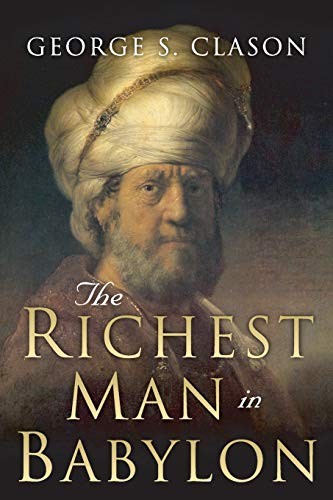
The Richest Man in Babylon earns its place in the Oikos lineage because it begins with the household. Before portfolio theory, market regimes, behavioral economics, or the metaphysics of abundance, there is a basic covenant between present labor and future freedom. Some of today's income must become tomorrow's agency.
Wealth begins when your future gains a claim on your present income.
The Core Framework
Clason presents several lists and stories, but the underlying structure is one cycle. Labor creates a flow. Discipline separates a share from consumption. Judgment gives that share productive work. Prudence keeps it alive. Skill expands the next flow.
The household capital cycle
Separate
Retain a fixed share of income before desire assigns the whole amount elsewhere.
Govern
Make expenditure answer to chosen priorities. Income sets a boundary even when appetite refuses one.
Employ
Move retained capital into productive service so ownership begins contributing beside labor.
Protect
Refuse risks you do not understand, promises built on fantasy, and advice detached from relevant competence.
Expand
Increase earning ability and repeat the cycle from a larger base without allowing lifestyle to absorb every gain.
The order matters. Investing cannot repair a household that retains nothing. Frugality alone cannot build much if retained cash remains idle forever. Return means little when one foolish loss destroys the base. Greater income changes nothing when every raise becomes a new obligation.
Clason's genius is architectural. Each rule corrects the failure of the one before it. Saving creates capital. Expenditure control protects the act of saving. Compounding gives saving purpose. Guarding against loss preserves compounding. Greater skill increases the material entering the system.
Pay Yourself First: Sequence Beats Intention
The modern phrase "pay yourself first" captures Clason's opening discipline, although his Babylonian formulation is older in style and more exact in spirit: keep part of what you earn. The crucial word is keep.
Most people try to save what remains after spending. Very little remains because desire is adaptive. Give it more room and it learns the dimensions of the new room. A raise creates relief for a month, then becomes normal. New services, better equipment, another payment, and a slightly richer standard of living arrive to claim the difference.
Saving first reverses the burden of proof. The future allocation becomes fixed and current spending must fit the remainder. This is precommitment in plain clothes. The decision happens once, under calm conditions, instead of being renegotiated at every purchase.
The familiar one-tenth rule matters less as a sacred number than as a minimum viable identity. Someone who retains a tenth has crossed from consumer of all production to owner of some production. The amount may begin small. The identity is already different.
Automation makes this stronger. Move the share when income lands. Put it beyond casual reach. Increase it when income rises. A rule executed by the system asks less of mood, memory, and willpower. That connection is where Clason meets Misbehaving: self-control improves when the environment carries part of the load.
A hard season can reduce or suspend the percentage. Reality gets a vote. The principle survives through honest resumption. Treating a temporary interruption as permanent defeat turns discipline into theater. The household needs a rule sturdy enough to bend and clear enough to restart.
Control Expenditures: Give Desire a Government
Clason draws a clean distinction between necessary expenses and desires. The line moves. Human beings can convert almost any repeated comfort into a felt necessity, then defend it with the intensity once reserved for shelter and food.
Expenditure control is therefore a problem of government. A budget is a constitution for competing claims. It tells each desire what authority it has, what boundary it cannot cross, and which higher commitments outrank it.
This differs from punishment. A household stripped of every pleasure usually revolts against its own plan. Resentment accumulates, the rule breaks, and the rebound purchase becomes proof that budgeting never worked. Clason's approach is more livable: enjoy life inside the portion assigned to living while protecting the portion assigned to becoming free.
The deeper question is whether spending purchases life or merely signals rank. Food with family, a tool that improves the work, a journey that changes perception, and time bought back from needless friction can be genuine uses of money. Status spending often creates an obligation whose emotional return decays faster than its payment schedule.
Control also requires looking at fixed costs. Small purchases receive moral attention because they are visible and frequent. Large recurring commitments quietly determine the shape of the household. Housing, vehicles, debt service, insurance, subscriptions, and business overhead establish how much freedom remains before the month begins.
Variable desire
Daily purchases reveal habits, but they remain adjustable. Friction, waiting periods, and a clear allowance can keep them inside bounds.
Fixed obligation
Recurring commitments pre-spend future labor. Each one should earn its place because it reduces the household's ability to change direction.
Every expense contains a second price: the productive life the money might have carried. That fact should create awareness, not guilt. Money is allowed to be spent. The point is to decide which present uses deserve the future uses they displace.
Make Gold Multiply: Ownership Joins Labor
Retained income becomes wealth only when it begins producing. Clason describes money as a worker whose offspring can also work. The image is ancient, but the mechanism is compounding: returns remain in the productive base and generate returns of their own.
Compounding gets presented as arithmetic because arithmetic is easy to display. Its real demands are behavioral. Capital needs time, continuity, acceptable return, reinvestment, and survival. Interrupt any one of them often enough and the clean curve in the illustration never appears in life.
Time does the heavy lifting late. Early progress looks weak because the base is small. This is where people abandon sound systems for dramatic ones. They compare a young compounder with somebody else's visible windfall, then exchange a durable process for a chance to skip the beginning.
Clason corrects that temptation by making the first retained coins meaningful. They are workers. Their number is modest, but their job has changed. This gives dignity to the early stage, when accumulated capital cannot yet impress anyone.
The modern application extends beyond financial securities. Productive capital can include ownership in a sound business, tools that increase output, education tied to real earning ability, intellectual property, property with sober economics, or diversified market assets. The common test is whether the asset has a credible way to produce value without requiring the owner to sell hours for every new dollar.
Return still has to be judged after taxes, fees, inflation, maintenance, and risk. A nominal gain can conceal a real loss. A high yield can be the market's way of advertising danger. Gold multiplies only when the productive engine is genuine and the base survives.
Guard Against Loss: The Return of Capital Comes First
Clason's advice on loss is the necessary brake on his enthusiasm for multiplication. Money should be placed where the principal has a reasonable expectation of safety, where the path to return can be understood, and where counsel comes from people competent in that exact field.
This remains brutally current. Every financial cycle invents a new costume for the old promise: extraordinary gain, small risk, easy explanation, social proof, and a reason the usual cautions no longer apply. Technology changes. Seduction barely moves.
Guarding capital begins with humility about the circle of competence. Familiarity with business does not create expertise in every business. Success in real estate does not confer mastery of derivatives. Intelligence in one domain can make a person more vulnerable in another because confidence crosses the boundary faster than skill.
Advice must be field-specific and incentive-aware. A brickmaker may be honest and industrious while remaining the wrong source for judging jewels. A modern adviser may have relevant credentials while still being paid to recommend the product. Competence matters. So does alignment.
Safety can never mean certainty. Cash loses purchasing power. Bonds carry rate and credit risk. Businesses fail. Property needs capital. Diversification reduces some risks while leaving systemic ones. The mature translation of Clason is to name the risk, size it, spread exposures that share a failure mode, and refuse any loss that can remove the household from the game.
This is the mechanical floor beneath Market Wizards and Hedge Fund Market Wizards. Clason says protect the purse. Schwager's traders show how that command behaves under live uncertainty: define invalidation, control position size, cut damage, and preserve the ability to act again.
The Parable as a Teaching Technology
Why Babylon? Clason could have written a short pamphlet of percentages and prohibitions. He chose merchants, scribes, lenders, builders, debtors, caravans, city walls, and clay tablets. The setting creates distance from the reader's defenses.
Direct advice easily becomes accusation. A story lets us judge another person's folly before recognizing our own. We see the craftsman asking the wrong expert, the heir chasing impossible returns, the debtor avoiding his obligations, and the laborer spending every coin. Recognition arrives sideways.
The archaic language also gives ordinary rules ceremonial weight. A savings rate sounds administrative. A law of gold sounds like something learned through consequence and carried across generations. The technique can become theatrical, yet it serves a real purpose: memory keeps images better than policy prose.
Parable compresses complexity into a portable decision pattern. When a tempting investment appears, the reader does not need to reconstruct a finance lecture. The image of misplaced counsel is already available. When income rises, the lean purse and the retained tenth return. The story acts as a retrieval device at the moment of choice.
There is a Hermetic quality to this. The city is the household written large. Irrigation, walls, trade, skilled labor, stored grain, debt, and productive capital all correspond to forces inside one financial life. Babylon prospers through directed flow. A purse does too.
Stories have a danger. They make outcomes feel morally tidy. Wisdom receives gold. Folly loses it. Actual life contains random injury, structural barriers, predatory systems, inherited advantage, and long periods when good conduct earns no visible reward. The parable teaches a pattern. It cannot prove that the world always rewards the person who follows it.
Debt, Dignity, and the Recovery of Agency
One of the book's strongest secondary themes is the relation between debt and self-command. The indebted man changes when he stops treating creditors as a fog of shame and starts giving every coin an assignment: a portion to live, a portion to repay, and a portion to retain.
The retained portion matters even during repayment. Pure deprivation can make the debtor feel that all labor belongs to the past. Keeping a small claim for the future restores agency and makes the plan psychologically inhabitable. Repayment honors obligation. Saving preserves the person doing the repaying.
Modern debt differs by type. A high-rate revolving balance, a fixed mortgage, a business loan tied to productive capacity, and a low-rate education loan do not belong under one moral label. Interest rate, term, collateral, tax treatment, cash-flow volatility, and the asset financed all matter.
Clason's durable insight is that debt removes future choice before future conditions are known. The more income already promised, the less room remains for illness, opportunity, family need, market stress, or a change of mind. Debt can be a tool. It always carries a claim on unborn labor.
The Household Is the First Economy
Oikos originally names the household, the field of stewardship from which economics takes its name. Clason's book belongs here because it refuses to separate finance from conduct. Earning, spending, saving, investing, borrowing, learning, and providing for old age are one system.
A portfolio can look sophisticated while the household beneath it remains fragile. The reverse also happens. A plain structure with controlled obligations, reserves, productive ownership, adequate protection, and growing skill can carry immense strength without looking impressive.
The household test changes the meaning of return. A decision that increases expected wealth while making the family vulnerable to one bad sequence may be poorly designed. An investment that demands constant attention can pay financially while taxing health and presence. A business expansion can grow revenue while destroying control of time.
Capital should serve the house. The house should never become fuel for the score.
What Marc Actually Uses
The Oikos application turns Clason's parables into a compact household operating system. The aim is consistent command over flow, not a temporary burst of austerity.
Install the first claim
Move a fixed share of every inflow into reserves or productive ownership before discretionary spending begins.
Cap the fixed structure
Review recurring obligations before cutting small pleasures. Large permanent claims determine the household's room to move.
Give each pool a job
Separate operating cash, emergency reserves, near-term commitments, and long-duration capital so one need cannot quietly consume every horizon.
Demand a return mechanism
Before investing, state how value is produced, who pays, what can break, and why the expected return justifies the risk.
Protect against single-point ruin
Limit concentration, insure true catastrophes, control debt, and keep enough liquidity that a sound asset never has to be sold at the worst moment.
Grow the producer
Invest in skill, relationships, tools, and judgment that increase the quality and durability of future earning power.
The Book's Real Mechanism
The book appears to teach thrift. Its deeper mechanism is the conversion of income into identity, then identity into structure.
A person begins by retaining a small share. Repetition creates evidence: I am someone who keeps part of what I produce. The growing reserve changes perception. Opportunities can be evaluated without desperation. Emergencies become problems instead of verdicts. Productive assets begin contributing. Skill and confidence rise together.
This creates a reinforcing cycle. Retention produces capital. Capital produces optionality. Optionality improves decisions. Better decisions protect and expand capital. The outer result grows from an inner change in who has authority over the coin.
Clason's system also reduces the number of heroic decisions required. There is no need to discover one perfect investment, forecast every cycle, or transform into a different personality overnight. Keep. Govern. Employ. Protect. Learn. The ordinary repetition is the mechanism.
Where the Book Is Weak or Dated
The Babylonian stage gives the book durability and hides some of its limits. Its world is overwhelmingly male, paternal, and hierarchical. Women mostly sit outside economic agency. Slavery appears as scenery and plot machinery rather than a moral catastrophe. That treatment should feel wrong to a modern reader because it is wrong.
The book also overstates the degree to which discipline controls outcomes. Saving a tenth is sound for a person with genuine margin. It can be impossible for someone facing low wages, disability, medical costs, caregiving, predatory debt, or unstable housing. Advice that ignores the absence of margin can turn structural pressure into private shame.
Homeownership receives the glow of universal wisdom, although ownership can be a poor choice under high prices, short time horizons, heavy maintenance, weak mobility, or unfavorable financing. A dwelling is both shelter and capital structure. The arithmetic has to be done in the place and time where the decision lives.
Clason's investment world is too clean. Finding a knowledgeable and honorable adviser does not eliminate market risk, fraud, conflict, regime change, or correlated loss. Expertise can be narrow. Incentives can bend judgment. A modern steward needs diversification, due diligence, custody awareness, tax knowledge, and an explicit view of liquidity.
The moral order of the parables sometimes implies that wealth confirms virtue and poverty reveals folly. Life refuses that equation. Good people make mistakes. Careful people meet catastrophe. Reckless people sometimes get rich. Luck and starting position matter.
Finally, the repeated formulas can make wealth feel like an end in itself. Clason says more about building the purse than deciding what the purse is for. Oikos supplies the missing purpose: capital should protect the household, widen useful choice, support worthy work, and free attention for the parts of life that cannot be purchased later.
These weaknesses narrow the book's authority without erasing its value. Its mechanics remain a powerful floor. They become wiser when joined to context, compassion, modern risk practice, and a clear definition of enough.
The Oikos Lineage
This is the seventh study in a twelve-book wealth sequence. Its role is the mechanical floor beneath every more elaborate philosophy of money.
- Behavioral finance: Morgan Housel and Richard Thaler explain why knowing the rule does not guarantee following it.
- Market practitioners: Jack Schwager's three Market Wizards volumes test risk, discipline, and adaptation under consequence.
- The mechanical floor: George Clason establishes retention, controlled flow, productive capital, and protection from ruin.
- New Thought: Wallace Wattles, Napoleon Hill, and Charles Haanel explore how thought, purpose, and belief shape material action.
- The synthesis: Charlie Munger and George Soros bring worldly models, incentives, fallibility, and reflexive feedback to the architecture of wealth.
Every later study assumes that some capital exists to allocate. Clason explains how it comes into being. He also exposes a useful test for every grand wealth doctrine: can the person keep part of what they earn, make sober decisions with it, and survive long enough for the philosophy to matter?
Read Alongside
The Psychology of Money
Clason supplies the rule of retention. Housel explains the emotional weather that breaks it, especially envy, moving goalposts, and the failure to define enough.
Misbehaving
Clason asks for self-command. Thaler shows why defaults, mental accounts, ownership, and present bias shape that command before conscious intention arrives.
Market Wizards
Clason's warning to guard gold becomes concrete market practice through position sizing, loss limits, method fit, and survival across repeated uncertainty.
The New Market Wizards
The household discipline of protecting the purse meets the trader's discipline of holding conviction conditionally and changing when the regime changes.
Hedge Fund Market Wizards
Clason explains why capital must work. The hedge fund study asks the next question: how should risk be sized when every productive opportunity is uncertain?
Oikos
The pillar extends the household frame into markets, macro conditions, portfolio construction, and the stewardship of capital as stored choice.
The Bottom Line
The Richest Man in Babylon survives because it places a few hard truths inside stories the mind can carry. Income alone does not create wealth. Desire expands to consume whatever remains ungoverned. Capital must be retained before it can be employed. Return without protection is temporary. Greater earning power matters only when some of the increase stays.
The book's age shows. Its household roles, moral simplicity, treatment of slavery, and confidence in universal prescriptions deserve direct criticism. Its financial floor still holds.
Give the future its share. Govern the rest without misery. Put ownership beside labor. Guard the base. Keep learning.
Sources and Further Reading
This is an original interpretation, not a chapter summary. It contains no purported quotations or page references. The source spine is George S. Clason's The Richest Man in Babylon (1926), including its parables on the cures for a lean purse, the laws of gold, lending, debt, luck, and productive work.